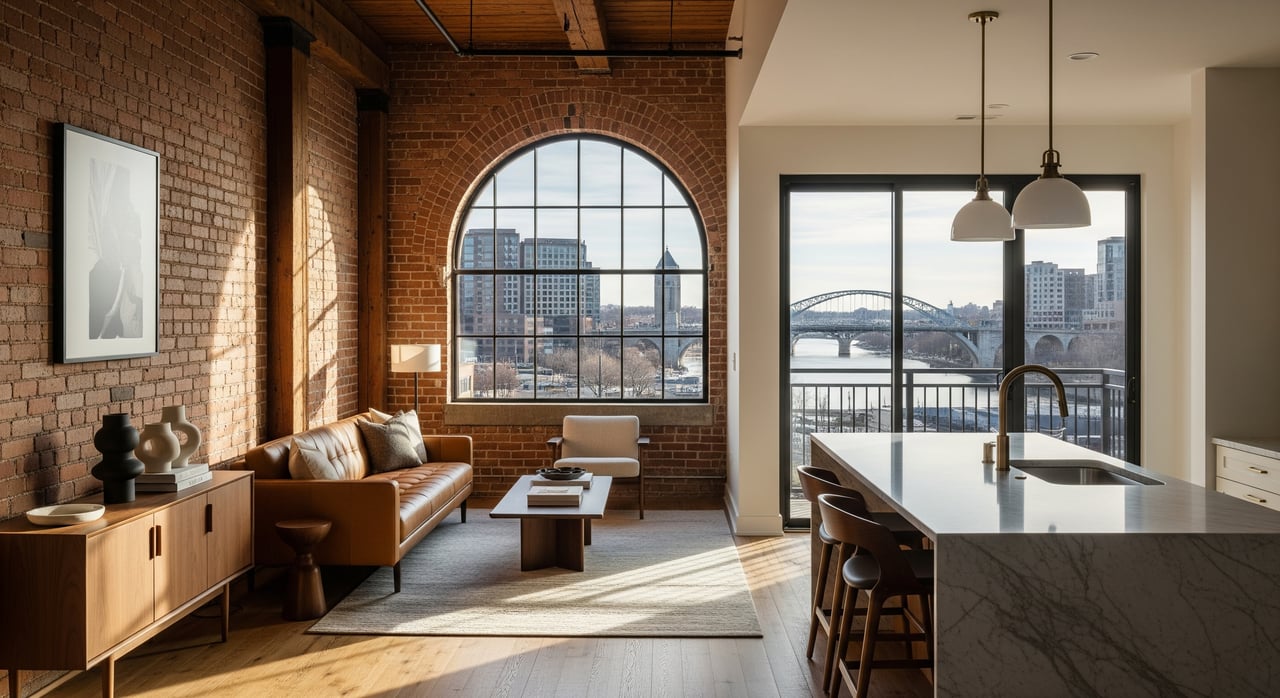
Love the Mill District but not sure whether a sleek condo or a character-rich loft fits you best? You are not alone. The neighborhood blends historic flour mills with modern towers, which gives you very different living styles on the same blocks. In this guide, you will learn the key differences in architecture, lifestyle, HOA rules, financing, and due diligence so you can choose with confidence. Let’s dive in.
Mill District at a glance
The Mill District sits along the west bank of the Mississippi River in downtown Minneapolis. It mixes converted mills and warehouses with newer mid- and high-rise residential buildings. You get walkable access to riverfront trails, cultural venues, and dining, along with notable historic resources.
Parts of the area fall under city preservation review, which can shape exterior work and certain interior changes that affect historic features. When you want to confirm rules on projects or building status, start with the City of Minneapolis’ Community Planning & Economic Development department and the city’s historic preservation staff.
What “condo” and “loft” mean here
In Minnesota, a condominium is a legal form of ownership that combines individual unit ownership with shared ownership of common elements through an association. The framework is governed by the Minnesota Common Interest Ownership Act, Chapter 515B.
A loft describes a style of unit and, in this neighborhood, often a building type. In the Mill District, lofts are commonly condos inside converted mills or warehouses. They feature open layouts, tall ceilings, large windows, and exposed brick or beams. Some new buildings use a loft aesthetic, but the classic Mill District loft usually lives in a historic conversion.
Architecture and daily living
Building character and design
- Condos in newer buildings offer modern systems, consistent floor plans, and a typical residential finish package. Amenities are common, such as fitness rooms and climate-controlled parking.
- Lofts in historic conversions deliver unique layouts, industrial windows, and authentic materials. Mechanical systems were retrofitted during conversion, and amenity levels vary by building.
Layout and privacy
- Condos often provide more defined rooms and bedroom separation, which can help if you work from home or need clear private space.
- Lofts offer flexible, open plans that are easy to customize. You may have fewer enclosed bedrooms unless you add partitions.
Light, views, and noise
- Newer condos may use floor-to-ceiling glass with skyline or river views. Insulation and sound control are typically to modern standards.
- Historic lofts can have dramatic light from oversized industrial windows. Sound and thermal performance vary by building and renovation quality.
Utilities and HVAC
- Condos usually have modern, individually controlled systems and straightforward metering.
- Loft conversions may use central steam or radiant heat or mixed systems. Confirm HVAC age, service history, and who pays for utilities.
Parking and mobility
- Most buildings include deeded or assigned garage parking. In a downtown setting, street parking is limited, so verify your stall is included or available to lease.
- The location favors biking and walking to riverfront trails and cultural spots, with transit options nearby.
HOA rules and ownership details
Both condos and lofts here typically sell as condominium units. The association’s documents control your rights and responsibilities. Review them closely, and when needed, consult a real estate attorney.
Key items to confirm in any building:
- Reserve study and capital plans. Older conversions may need larger reserves for windows, roofs, and masonry.
- Rules on alterations. Historic buildings and some associations restrict exterior changes or interior work that affects character-defining features. The city’s historic preservation staff can share guidance on designated properties.
- Insurance. The master policy typically covers the structure and common elements. You will likely need an HO-6 policy for interiors and personal property. The Minnesota condo framework is detailed in Chapter 515B.
- Leasing and short-term rentals. Many associations limit rentals, and Minneapolis requires licensing for short-term rentals. Verify bylaws and check with CPED on local rules before you plan to rent your unit.
Financial snapshot to compare
Price and value drivers
Both options can command premiums for different reasons. Historic lofts with standout character or river views often attract strong demand. Newer condos with extensive amenities and turnkey finishes also price at a premium. Your best comparison will come from recent sales in the specific building.
HOA dues and what they include
- Loft conversions may have higher dues if they include building-wide heating or invest heavily in reserves.
- Newer condos may have higher dues if they offer more amenities or services.
- Confirm inclusions like heat, water, internet, parking, storage, and building insurance.
Taxes and homestead
Property taxes are assessed by Hennepin County. Use the county portal to review parcel history and classifications. For owner-occupants, homestead designation can affect tax treatment. Start with the county’s property information site and confirm details with a tax advisor.
Financing and approvals
Your lender will review both you and the building. Some loans require project-level approvals.
- FHA and VA loans have specific condo criteria, such as reserve levels and owner-occupancy. Learn more from HUD’s overview of condominium approvals.
- Older conversions or mixed-use buildings can be non-warrantable, which may require a larger down payment or specialized lenders. Share the full association documents with your lender early.
Preservation and renovation planning
If you love the idea of updating a historic loft, factor in preservation rules and timelines before you buy.
- Exterior changes, rooftop work, or alterations that affect historic features may require city review. Connect with the city’s historic preservation staff for process and requirements.
- Some certified historic projects can qualify for the federal rehabilitation tax credit. Review the National Park Service’s guidance on Historic Preservation Tax Incentives and consult the Minnesota Historical Society’s preservation resources for state context.
Due-diligence checklist for buyers
Use this quick checklist when comparing a condo and a loft in the same search.
Ownership and rules
- Confirm legal form and unit boundaries under the condo declaration.
- Review bylaws, house rules, and any historic covenants.
- Check rental, pet, and short-term rental policies.
Financial health
- HOA dues, inclusions, and fee trend over the past few years.
- Most recent reserve study and operating budget.
- Special assessment history and any planned capital projects.
Building condition
- Age and condition of roof, windows, exterior masonry, elevators, and mechanicals.
- Sound transfer between units and floors.
- HVAC type, service history, and whether utilities are individually metered.
Practical living
- Parking type and location, deeded vs. assigned vs. leased, and monthly costs.
- Storage options, bike rooms, and package handling.
- Amenities that matter to you and any associated fees.
Location and risk
- Proximity to river trails, parks, restaurants, and transit.
- Noise exposure from streets or events.
- Floodplain considerations. Start your research with Hennepin County’s property information and discuss insurance with your agent.
Resale and marketability
- Days on market and recent comparable sales for the specific building.
- Typical buyer profile for the building and how that supports future resale.
How to choose what fits you
Pick a loft if you want distinctive character, open layouts, and the story of a converted mill. Make sure you are comfortable with potential trade-offs like varied sound insulation or more complex windows and systems.
Choose a condo if you prefer modern amenities, consistent layouts, and predictable maintenance. You will often get better sound control and more defined rooms, which can help with remote work or hosting guests.
If you are split, walk the buildings at different times of day, test sound transfer, and compare HOA documents side by side. A small lifestyle detail or a single policy in the bylaws can make your decision clear.
Smart next steps
- Share your goals with a local advisor who knows both historic conversions and newer towers.
- Get mortgage pre-approval and provide your lender with the association documents early.
- If you plan improvements, confirm what the HOA and the city will allow. For historic properties, consult historic preservation staff before you finalize plans.
When you want tailored guidance on Mill District condos and lofts, connect with Christian Klempp for a clear plan, on-the-ground insight, and a smooth path from tour to closing.
FAQs
Are Mill District lofts always pricier than condos?
- Not always. Prices depend on size, view, finishes, parking, and building condition. Unique character or river views can raise loft prices, and high-amenity condos can also command premiums.
Can I use an FHA or VA loan on a Mill District loft?
- Possibly. FHA and VA rules apply to the condo project as a whole, so ask your lender early and review HUD’s condominium approvals guidance.
Do historic lofts mean more maintenance?
- They can. Older buildings may face window, masonry, or system projects. Review the reserve study, meeting minutes, and capital plans to understand near-term costs.
What renovation limits apply in historic buildings?
- Exterior changes and interior work that affect historic features may need city review. Start with the city’s historic preservation team for guidance.
What should I look for in condo documents?
- Reserve levels, special assessment history, litigation, rental and pet rules, insurance coverage, alteration policies, and parking rights under the declaration and bylaws.